EN




Fault visibility remains a critical challenge in modern electrical distribution networks. When faults occur on medium voltage circuits, operators often lack real-time information about their exact location and severity, leading to delayed response times and prolonged outages. FPI for medium voltage network technology addresses this fundamental gap by providing instantaneous fault detection and location data that enables operators to pinpoint problems faster and restore service efficiently. This capability transforms how utilities manage distribution reliability and customer satisfaction.
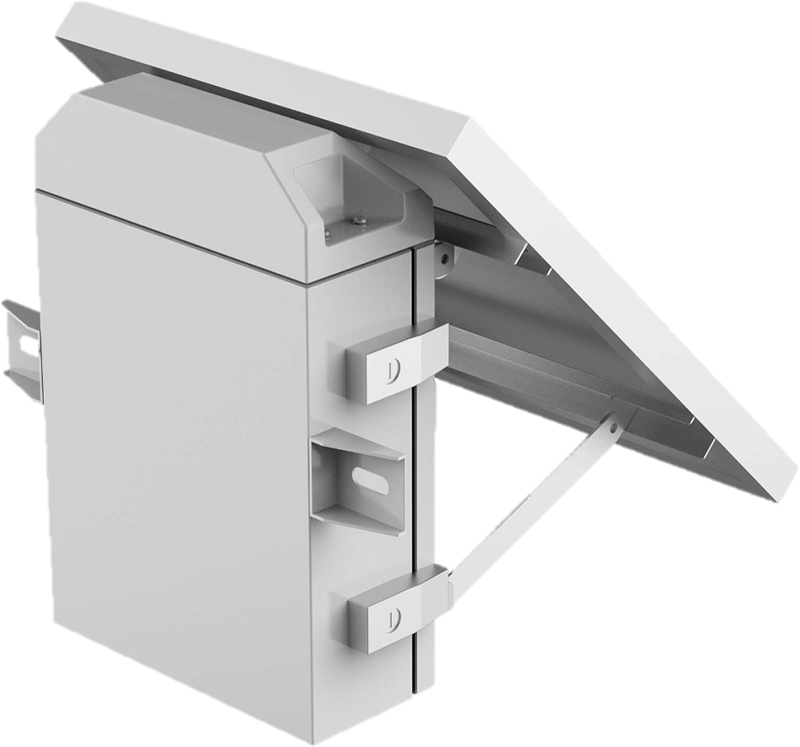
Integrating fpi for medium voltage network into your distribution infrastructure establishes a foundation for proactive fault management. Traditional relay systems depend on secondary indicators and manual field inspection, consuming hours or days to locate faults. Modern fault protection intelligence delivers precise fault location data directly to control centers, enabling dispatch teams to mobilize resources with surgical accuracy. This shift from reactive to predictive network management significantly improves operational efficiency and reduces customer impact during outages.
Understanding Fault Detection in Medium Voltage Systems
The Role of Distribution Network Relay Settings
Distribution network relay settings form the backbone of traditional protection schemes, but they operate within significant constraints. Relay coordination requires precise time delays and pickup thresholds that balance sensitivity with stability, often leaving blind spots in fault detection. When a fault occurs, relays respond based on current magnitude and duration, but they provide no information about fault location or nature. Medium voltage fault protection coordination efforts have historically focused on isolating faults quickly rather than understanding them completely. This limitation means that even after successful isolation, troubleshooting consumes valuable time as crews travel to multiple segments searching for the actual fault point.
Limitations of Traditional Protection Methods
Medium voltage switchgear protection schemes typically employ circuit breakers, reclosers, and sectionalizers coordinated through carefully calculated relay settings. While these devices prevent equipment damage and protect personnel, they provide minimal diagnostic capability. A relay trip signal tells operators that a fault occurred on a feeder, but not where. Crews must manually patrol circuits or use expensive diagnostic equipment to locate the problem. During this diagnostic window, customers remain without service, affecting residential areas and industrial operations. The gap between fault occurrence and location discovery directly impacts revenue loss, customer retention, and utility reputation.
How FPI Technology Enhances Network Fault Visibility
Real-Time Fault Location and Detection
Fault protection intelligence systems work alongside medium voltage fault protection coordination by adding a visibility layer that traditional relays cannot provide. When a fault occurs, FPI devices detect the fault inception immediately and transmit location data to the control center before or simultaneously with relay operation. This real-time reporting eliminates the guesswork in field dispatch. Operators know the exact circuit section, enabling crews to arrive prepared with appropriate equipment and techniques. Some advanced FPI systems also classify fault type, voltage, and duration, providing crews with additional context for safer, faster restoration efforts.
Integration with Existing Distribution Infrastructure
Modern FPI technology integrates seamlessly with existing distribution network relay settings and medium voltage switchgear protection schemes without disrupting current operations. FPI devices communicate through standard SCADA protocols, allowing data integration into existing control center platforms. This compatibility means utilities can deploy FPI incrementally, focusing initially on high-impact feeders or critical circuits. Integration costs remain manageable because no fundamental changes to relay coordination or protection philosophy are required. The FPI system enhances coordination by providing the diagnostic information that distribution network relay settings alone cannot deliver.
Operational Benefits and Risk Reduction
Accelerating Fault Response and Restoration
The primary operational benefit of FPI for medium voltage network systems is dramatically reduced outage duration. When crews receive precise fault location data, they reach the problem area faster and implement solutions immediately. Restoration times that previously required hours often reduce to minutes. This acceleration directly improves customer satisfaction and reduces revenue leakage from service interruptions. For industrial customers, faster restoration prevents production losses and equipment damage. Utilities deploying FPI report average restoration time reductions of forty to sixty percent on targeted feeders, translating to measurable improvements in System Average Interruption Duration Index metrics.
Supporting Preventive Maintenance Strategies
FPI systems generate historical fault data that informs predictive maintenance programs. By tracking recurring faults on specific circuit segments, maintenance teams identify equipment degradation before catastrophic failure occurs. Medium voltage switchgear protection schemes benefit from this data because engineers can adjust relay settings based on actual fault patterns rather than theoretical scenarios. Distribution network relay settings become more refined when coordinated with FPI insights, reducing nuisance trips while maintaining equipment protection. Over time, this data-driven approach reduces unplanned outages and extends equipment lifespan, lowering total cost of ownership across the distribution network.
FAQ
How does FPI technology improve upon traditional medium voltage fault protection coordination?
FPI technology adds precise fault location capability to traditional protection schemes. While medium voltage fault protection coordination focuses on isolating faults quickly through relay coordination, FPI pinpoints the exact fault location, enabling operators to dispatch crews directly to the problem area. This combination of fast isolation plus rapid diagnosis reduces total outage duration significantly compared to traditional methods relying on field inspection alone.
Can FPI integrate with existing distribution network relay settings?
Yes, modern FPI systems integrate with existing distribution network relay settings through standard SCADA protocols. Integration requires no changes to relay coordination philosophy or hardware modifications. FPI operates as an enhancement layer that provides diagnostic information beyond what relays deliver. Utilities can deploy FPI incrementally alongside current protection schemes without operational disruption or expensive infrastructure replacement.
What specific advantages does FPI provide for medium voltage switchgear protection schemes?
FPI provides medium voltage switchgear protection schemes with comprehensive fault data that improves coordination accuracy and maintenance planning. Historical fault patterns inform relay setting optimization, reducing nuisance trips while maintaining equipment safety. Precise fault location enables faster crew response, reducing downtime and customer impact. This data foundation transforms switchgear protection from a static safety function into a dynamic tool for network intelligence and operational excellence.