EN



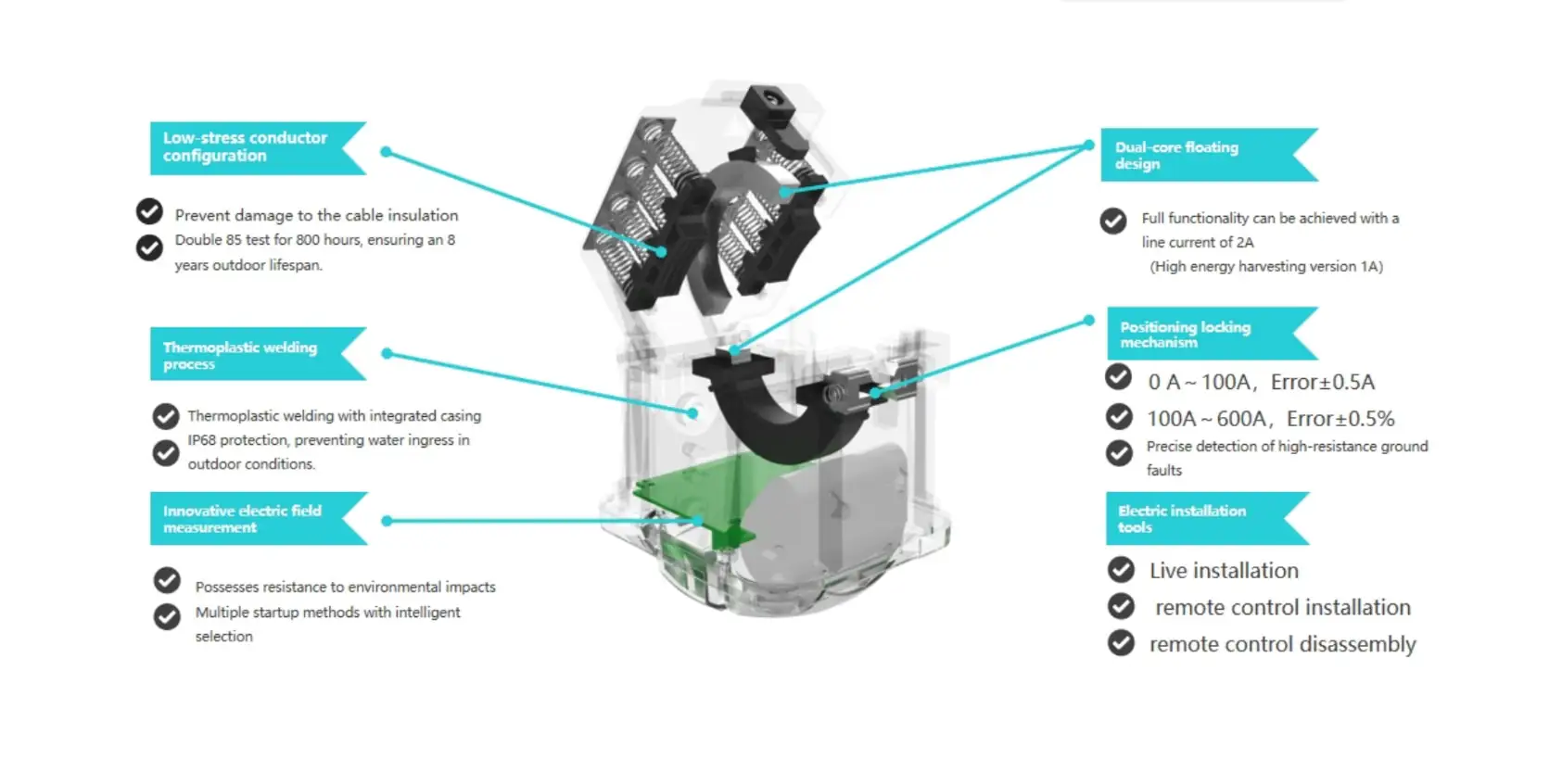
An fault passage indicator factory plays a critical role in customizing current sensing thresholds for industrial clients operating in power distribution networks. These manufacturers work directly with utilities and equipment operators to design protection systems that detect electrical faults with precision and reliability. The process of threshold customization involves deep technical collaboration, rigorous testing, and adherence to industry standards that govern high voltage indicator manufacturing standards and arc flash protection device production.

Customization of current sensing thresholds is not a one-size-fits-all proposition. Every electrical system has unique characteristics based on load patterns, fault frequencies, equipment types, and operational environments. An electrical fault detection equipment supplier must understand these variables to deliver solutions that protect assets without creating nuisance trips or missing genuine faults. The threshold customization process begins with comprehensive system analysis and continues through production, testing, and post-installation validation.
Understanding Client Requirements and System Analysis
Collaboration with Utility Partners
When clients approach a fault passage indicator factory, they bring specific operational challenges. Utilities operating in complex networks with multiple substations need protection devices that respond appropriately to their unique fault signatures. The manufacturer must gather detailed information about voltage levels, expected fault currents, cable types, transformer configurations, and historical fault data. This information forms the foundation for threshold design and determines how the arc flash protection device production process will proceed.
Technical discussions between the electrical fault detection equipment supplier and the client are essential. Engineers from the factory review single-line diagrams, protective device coordination studies, and maintenance records. They identify where faults are most likely to occur, what current magnitudes would indicate a genuine fault versus normal switching operations, and what response time is critical for equipment protection. These conversations ensure that high voltage indicator manufacturing standards are met while addressing client-specific needs.
Load Profile and Environmental Considerations
Different operational environments require different threshold approaches. A fault passage indicator factory working with industrial facilities must account for motor inrush currents, which can temporarily spike without indicating a fault condition. Similarly, utilities with weather-exposed lines experience different fault patterns than underground cable networks. Temperature variations, humidity, and geographic location all influence how sensors perform and what threshold settings will function reliably.
The electrical fault detection equipment supplier performs detailed load analysis to establish baseline current profiles. Peak normal operating currents, daily variations, seasonal changes, and emergency scenarios are all evaluated. This analysis determines the margin between normal maximum currents and fault detection thresholds. Without proper margin, nuisance trips disrupt service; with excessive margin, genuine faults go undetected. Arc flash protection device production integrates these findings into the manufacturing specifications.
Threshold Design and Technical Implementation
Current Sensing Parameter Configuration
A fault passage indicator factory implements threshold customization through precise sensor calibration and electronic tuning. Most modern devices use microprocessor-based controls that allow multi-level threshold settings. The primary threshold typically detects high-magnitude faults that represent immediate danger. Secondary thresholds may be configured to identify developing faults or persistent overcurrent conditions. The high voltage indicator manufacturing standards require that each threshold be independently adjustable and verifiable.
The electrical fault detection equipment supplier works with graduated threshold levels rather than simple on-off settings. For example, a device might have a phase fault threshold set at 500 amperes, a ground fault threshold at 200 amperes, and a prolonged overcurrent threshold at 350 amperes for sustained durations. Each threshold is engineered to provide appropriate sensitivity without false triggering. The arc flash protection device production process documents these settings in device firmware and provides clients with adjustment protocols.
Time-Current Characteristic Development
Time-current characteristics define how quickly a protective device responds based on fault current magnitude. A fault passage indicator factory customizes these curves to match the client's protective device coordination strategy. Lower fault currents might require longer detection times to allow upstream devices to clear the fault, while higher currents warrant immediate response. The relationship between current level and response time is carefully engineered during the design phase.
Microprocessor-based devices allow sophisticated algorithms that the electrical fault detection equipment supplier can tailor to each installation. Some systems use inverse time characteristics where smaller overcurrents take longer to detect, allowing normal transients to pass. Instantaneous thresholds capture severe faults immediately. The high voltage indicator manufacturing standards require that time-current behavior be documented and verified through laboratory testing. Arc flash protection device production integrates these algorithms into each unit's memory before shipment.
Testing, Validation, and Post-Production Support
Factory Testing and Certification
Before delivery to clients, a fault passage indicator factory conducts rigorous validation testing. Each device undergoes functional testing with the customized thresholds applied. Test currents are injected into the sensor circuits to verify that detection occurs at configured levels and that false signals do not trigger. Environmental testing ensures performance across specified temperature ranges and humidity conditions. The electrical fault detection equipment supplier maintains detailed test records for each unit.
Calibration certificates document that the arc flash protection device production met all specifications. High voltage indicator manufacturing standards require traceability to national standards organizations. Independent verification may be performed using certified test equipment. The fault passage indicator factory provides clients with calibration data, threshold settings, and performance curves specific to each device. This documentation allows clients and their technicians to understand the device's intended behavior and verify proper operation in the field.
On-Site Commissioning and Support
The electrical fault detection equipment supplier typically supports on-site commissioning to ensure thresholds function correctly in the actual electrical environment. Technicians verify that the device detects test currents injected into the system and that response times align with expectations. They confirm that normal operating currents do not trigger false alarms. Load monitoring may occur over several weeks to validate that threshold settings remain appropriate as seasonal load variations occur.
A fault passage indicator factory maintains ongoing support for the devices it produces. If operational changes occur at the client site, such as equipment upgrades or system reconfiguration, the manufacturer can assist with threshold adjustments. Documentation provided includes procedures for threshold modification, allowing clients to make minor adjustments as needed. Arc flash protection device production quality extends beyond manufacturing into the operational life of the equipment, ensuring long-term reliability and client satisfaction.
FAQ
Why do electrical fault detection equipment suppliers need client-specific threshold customization?
Universal thresholds cannot accommodate the wide variety of electrical system configurations, load characteristics, and operational requirements across different utilities and industrial facilities. A fault passage indicator factory must customize thresholds to match each client's specific fault signatures, normal operating ranges, and protection coordination strategies. Without customization, devices would either miss genuine faults or generate excessive nuisance trips that disrupt service and damage equipment reliability.
What standards govern how a fault passage indicator factory designs thresholds for arc flash protection device production?
High voltage indicator manufacturing standards such as IEEE C37.42, IEC 61869, and ANSI standards provide requirements for protective device performance, accuracy, and safety. These standards specify how thresholds must be calibrated, documented, and verified. The electrical fault detection equipment supplier follows these standards throughout the design and production process to ensure devices meet national safety requirements and function reliably in hazardous electrical environments.
How does a fault passage indicator factory ensure customized thresholds will work correctly after installation?
The electrical fault detection equipment supplier conducts factory testing to validate each device's customized thresholds before shipment. On-site commissioning by factory technicians verifies performance in the actual electrical environment. Load monitoring after installation confirms that thresholds operate appropriately during normal operations. The arc flash protection device production process includes calibration certificates and documentation that allow clients and their technicians to verify device performance and understand intended behavior throughout the device's operational life.
Table of Contents
- Understanding Client Requirements and System Analysis
- Threshold Design and Technical Implementation
- Testing, Validation, and Post-Production Support
-
FAQ
- Why do electrical fault detection equipment suppliers need client-specific threshold customization?
- What standards govern how a fault passage indicator factory designs thresholds for arc flash protection device production?
- How does a fault passage indicator factory ensure customized thresholds will work correctly after installation?