EN
EN



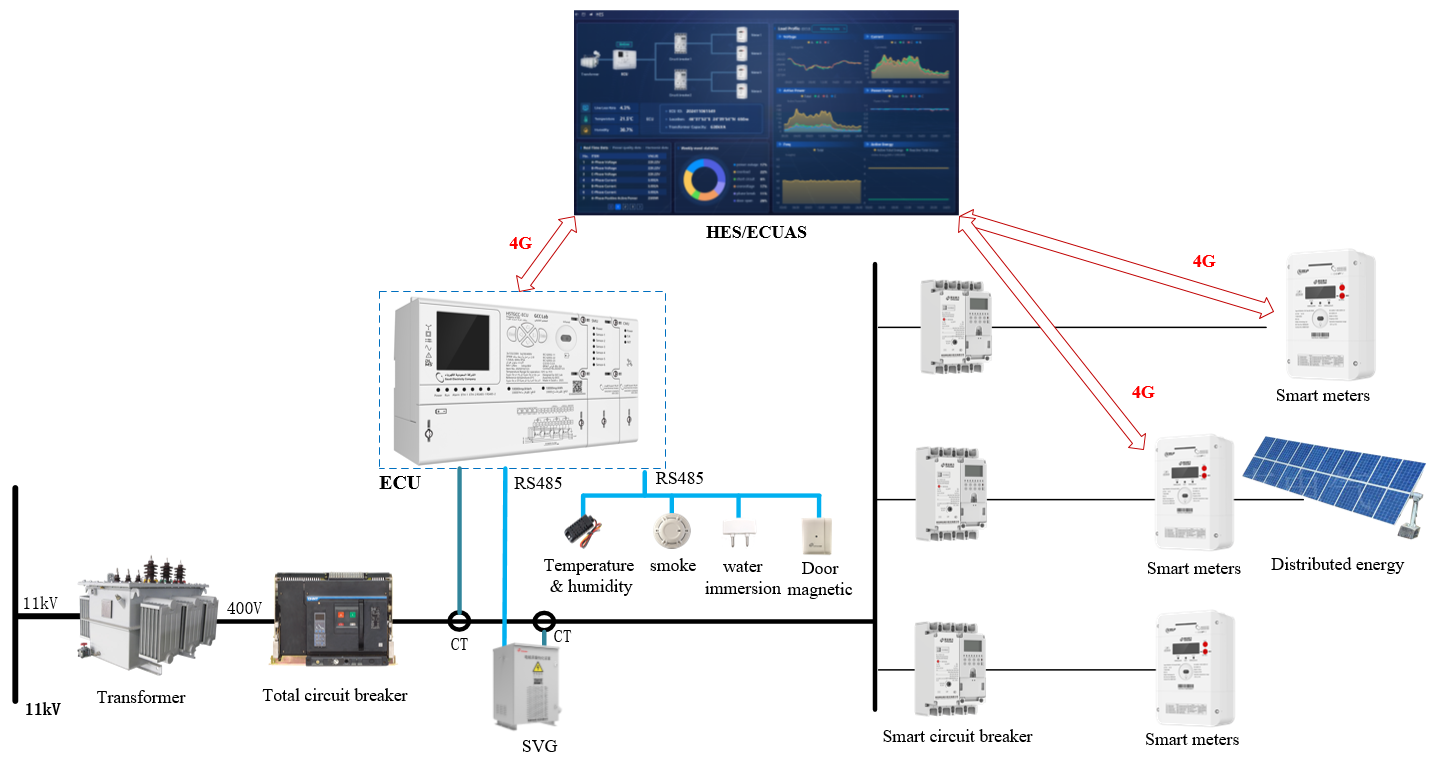
In low-voltage distribution networks, hidden power loss silently erodes energy efficiency and inflates operational costs before anyone notices a problem. wire loss control is the systematic approach that helps engineers and facility managers detect, quantify, and eliminate these invisible losses before they become costly liabilities. Without a structured wire loss control strategy, many facilities operate under the false assumption that their networks are performing optimally, while significant energy is being wasted through conductor resistance, unbalanced loads, and poor power factor conditions.
Effective wire loss control transforms reactive maintenance into proactive energy governance. When applied consistently in low-voltage networks, wire loss control provides measurable data that supports both technical improvements and financial justification for infrastructure upgrades. This article explores how wire loss control uncovers hidden power loss, what mechanisms drive that loss, and how modern compensation technology strengthens wire loss control outcomes across industrial and commercial settings.
The Hidden Nature of Power Loss in Low-Voltage Networks
Why Power Loss Stays Invisible Without Wire Loss Control
Power loss in low-voltage networks rarely triggers immediate alarms. It accumulates gradually through resistive heating in conductors, phase imbalance, harmonic distortion, and reactive power demand. Without wire loss control monitoring, these loss sources blend into background energy consumption, making them nearly impossible to isolate through routine billing analysis alone. Wire loss control introduces precise measurement points that expose the gap between supplied energy and consumed energy, revealing exactly where losses are concentrated.
Wire loss control relies on comparing input power at the supply side with actual load consumption across each circuit segment. When wire loss control data shows a consistent discrepancy, engineers can trace the root cause to specific cable runs, connection points, or load configurations. This level of granularity is what distinguishes wire loss control from general energy auditing, because wire loss control targets the physical infrastructure rather than just the billing summary.
Common Loss Drivers That Wire Loss Control Exposes
Several technical conditions generate hidden power loss that wire loss control is specifically designed to find. Phase current imbalance is one of the most significant contributors, because unequal loading across three phases forces neutral current to rise, increasing resistive losses in both phase conductors and the neutral line. Wire loss control systems monitor imbalance ratios continuously, flagging conditions that exceed acceptable thresholds. Wire loss control also identifies poor power factor as a driver of apparent power inflation, which raises current levels and conductor heating without delivering useful work.
Harmonic currents introduced by variable frequency drives, switching power supplies, and nonlinear loads also contribute significantly to network losses. Wire loss control analysis captures harmonic profiles across the network, helping engineers prioritize which loads require filtering or compensation. Through wire loss control, the cumulative effect of these individual loss factors becomes visible as a unified loss percentage, making it practical to set reduction targets and track progress over time.
How Wire Loss Control Detects and Quantifies Hidden Losses
Measurement Architecture Behind Wire Loss Control
Wire loss control depends on a layered measurement architecture that captures voltage, current, power factor, and harmonic data simultaneously at multiple points within the network. By deploying measurement nodes at the incoming supply, at distribution panels, and at major load groups, wire loss control builds a complete energy flow map. This map allows wire loss control software to calculate line losses segment by segment, identifying which cable runs carry the highest loss burden relative to the load they serve.
Modern wire loss control platforms use real-time data acquisition to detect transient loss events that traditional interval meters would miss. Wire loss control systems can correlate loss spikes with specific operational events, such as motor startups or shift-change load surges, providing engineers with actionable context rather than abstract averages. This dynamic visibility is what makes wire loss control a genuine diagnostic tool rather than a passive logging system.
Active Compensation as a Wire Loss Control Response
Once wire loss control identifies the dominant loss mechanisms, active compensation devices provide a targeted response. Active unbalance compensation directly addresses phase current imbalance, which is one of the primary targets of wire loss control in low-voltage networks. By dynamically redistributing reactive and imbalance currents, these devices reduce the excess conductor heating that wire loss control has flagged as a loss source. Wire loss control metrics confirm the improvement in real time, creating a feedback loop between detection and correction.
Wire loss control outcomes improve substantially when compensation is applied at the point of loss origin rather than at a centralized level. Distributed wire loss control combined with localized compensation ensures that each segment of the network is optimized individually, preventing loss from one section from masking improvement in another. This approach gives wire loss control programs a clear, verifiable path from measurement to reduction to confirmed savings.
Practical Benefits of Wire Loss Control in Industrial Settings
Operational and Financial Impact of Wire Loss Control
Wire loss control delivers direct financial benefits by reducing the energy that utilities charge for but that never reaches productive loads. In facilities with large motor fleets, compressed air systems, or continuous process lines, wire loss control consistently uncovers loss rates that represent a meaningful percentage of total energy spend. Wire loss control data also supports utility tariff negotiations, equipment sizing decisions, and capital investment planning by providing verified loss baselines and improvement trajectories.
Beyond financial return, wire loss control reduces thermal stress on cable insulation, connectors, and switchgear components, extending asset life and reducing maintenance frequency. Facilities that implement wire loss control report fewer unexplained breaker trips, lower transformer operating temperatures, and more stable voltage profiles across production equipment. These reliability gains reinforce the case for wire loss control as a long-term infrastructure management strategy rather than a one-time audit exercise.
Scaling Wire Loss Control Across Network Segments
Wire loss control scales effectively from a single distribution panel to a campus-wide network by replicating the same measurement and analysis logic at each level. Wire loss control programs typically begin with the highest-loss segments identified during initial assessment, then expand systematically as early successes validate the methodology. This phased approach ensures that wire loss control investment is concentrated where the return is highest, building organizational confidence while delivering measurable energy savings.
FAQ
What exactly does wire loss control measure in a low-voltage network?
Wire loss control measures the difference between energy supplied at the network input and energy consumed by the actual loads. It captures voltage, current, power factor, and harmonic data across multiple network points to calculate line losses segment by segment, identifying where energy is being lost to conductor resistance, imbalance, or reactive current.
How does wire loss control differ from a standard energy audit?
A standard energy audit typically reviews billing data and equipment lists to estimate consumption patterns. Wire loss control goes further by measuring real-time energy flow at the conductor level, pinpointing specific cable segments, connection points, or load configurations responsible for hidden losses. Wire loss control is an ongoing diagnostic process, not a periodic snapshot.
Can wire loss control work alongside active compensation devices?
Yes. Wire loss control and active compensation devices work as a highly effective combination. Wire loss control identifies and quantifies the imbalance, reactive power, and harmonic losses present in the network, while active compensation devices correct those conditions in real time. Wire loss control metrics then verify the effectiveness of the compensation, creating a closed-loop improvement cycle.