EN
EN



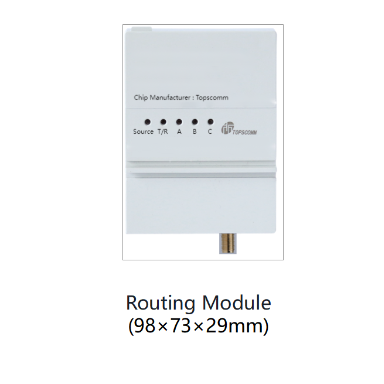
Modern industrial and commercial applications increasingly demand versatile communication solutions that can seamlessly operate across multiple protocols and networks. A dual mode communication module represents a sophisticated technological advancement that enables devices to communicate through two different modes or standards simultaneously, providing unprecedented flexibility and reliability in data transmission. These modules have become essential components in sectors ranging from smart manufacturing to telecommunications infrastructure, where maintaining consistent connectivity across diverse network environments is crucial for operational success.
Improved Reliability and Redundancy
Automatic Failover Mechanisms
Reliability represents a cornerstone benefit of dual mode communication modules, particularly through their sophisticated failover capabilities. When the primary communication channel encounters issues such as network congestion, signal interference, or complete outages, the module automatically switches to the secondary communication mode without interrupting data transmission or requiring manual intervention.
This automatic switching mechanism proves invaluable in applications where continuous connectivity is essential, such as remote monitoring systems, industrial automation, and emergency communication networks. The seamless transition between communication modes ensures that data logging, real-time monitoring, and control functions continue operating without gaps, maintaining system integrity and operational continuity.
Load Distribution and Performance Optimization
Advanced dual mode communication module implementations can intelligently distribute communication loads across both available channels, optimizing overall system performance. This load balancing approach prevents any single communication path from becoming overwhelmed while maximizing the utilization of available bandwidth and processing resources.
The performance optimization extends beyond simple load distribution to include dynamic channel selection based on real-time network conditions, signal quality, and latency requirements. This intelligent switching ensures that time-sensitive data transmission occurs through the most suitable communication channel, while less critical information can utilize alternative paths as needed.
Cost-Effectiveness and Resource Optimization
Reduced Hardware and Maintenance Requirements
From an economic perspective, dual mode communication modules deliver significant cost advantages by consolidating multiple communication functions into a single hardware platform. This consolidation reduces the total number of components required for comprehensive connectivity solutions, simplifying inventory management, reducing spare parts requirements, and minimizing maintenance overhead.
The reduced component count also translates to lower power consumption, decreased physical space requirements, and simplified installation procedures. These factors contribute to lower total cost of ownership while improving system reliability through reduced complexity and fewer potential failure points.
Streamlined Development and Deployment
Development teams benefit from simplified integration processes when working with dual mode communication modules, as they need to master only one hardware platform and software development kit instead of multiple separate systems. This unified approach reduces development time, lowers training requirements, and minimizes the potential for integration errors that commonly occur when combining disparate communication technologies.
The streamlined deployment process extends to field installation and commissioning activities, where technicians can configure and test both communication modes using standardized procedures and tools. This consistency reduces installation errors, accelerates deployment timelines, and ensures more predictable project outcomes.
Advanced Security and Data Protection
Multi-Layer Security Implementation
Security considerations become increasingly complex in modern communication environments, and dual mode communication modules address these challenges through comprehensive multi-layer security implementations. Each communication mode can utilize its own security protocols and encryption methods, providing defense in depth against various types of cyber threats and unauthorized access attempts.
The ability to maintain separate security domains for different communication channels allows organizations to implement graduated security policies based on data sensitivity and transmission requirements. Critical control commands might utilize highly encrypted channels with strict authentication requirements, while routine monitoring data can use more efficient but appropriately secured communication paths.
Secure Backup Communication Channels
Dual mode modules provide inherent security advantages through their ability to maintain secure backup communication channels that remain isolated from primary network infrastructure. This separation ensures that security breaches affecting one communication mode do not automatically compromise the entire system, providing essential resilience against sophisticated cyber attacks.
The backup channel capability proves particularly valuable for emergency communications and system recovery procedures, where maintaining secure connectivity becomes critical even when primary networks are compromised or unavailable. This redundant security architecture ensures that essential functions can continue operating while security incidents are addressed and resolved.
Future-Proofing and Scalability Benefits
Technology Evolution Adaptation
The rapid evolution of communication technologies presents ongoing challenges for system designers and operators who must balance current functionality with future requirements. Dual mode communication modules provide inherent future-proofing capabilities by supporting multiple communication standards simultaneously, allowing systems to adapt to changing technology landscapes without requiring complete hardware replacements.
This adaptability becomes particularly valuable as new communication standards emerge and existing protocols are updated or deprecated. Organizations can gradually transition to newer technologies while maintaining operational continuity through the secondary communication mode, ensuring that technology upgrades occur smoothly without disrupting critical business operations.
Scalable Architecture Support
Modern dual mode communication modules are designed with scalability in mind, supporting architectures that can grow and evolve alongside organizational requirements. The ability to handle increasing data volumes, additional connected devices, and expanding network coverage areas ensures that initial investments continue providing value as systems scale up to meet growing demands.
The scalable nature extends to both horizontal scaling, where additional devices and endpoints are added to existing networks, and vertical scaling, where individual communication channels are upgraded to higher capacity or more advanced protocol versions. This flexibility ensures that dual mode communication modules remain relevant and valuable throughout extended operational lifecycles.
FAQ
How do dual mode modules handle data synchronization between different communication channels
Most advanced dual mode communication modules include sophisticated data synchronization mechanisms that ensure consistency across both communication channels. These systems typically employ buffering techniques, timestamp coordination, and priority-based transmission protocols to maintain data integrity. The modules can intelligently determine which channel to use for specific data types while ensuring that critical information reaches its destination through the most reliable path available.
What are the power consumption considerations for dual mode communication modules
Power consumption varies significantly based on the specific communication modes being used and the operational configuration. However, most modern dual mode modules are designed with power efficiency in mind, often consuming less power than two separate single-mode devices would require. Many modules include intelligent power management features that can disable unused communication modes, implement sleep states during periods of inactivity, and optimize transmission power based on signal conditions to maximize battery life in portable applications.
Can dual mode communication modules operate both channels simultaneously
Yes, most dual mode communication modules are designed to operate both communication channels simultaneously, though this capability depends on the specific hardware design and software implementation. Simultaneous operation enables load balancing, redundancy, and parallel data streams for different types of information. However, some applications may choose to use the modules in failover mode, where the secondary channel remains in standby until needed, to optimize power consumption or reduce interference between channels.